Email us at [email protected]
If your child is struggling to speak, focus, or learn — I understand.
Not as a therapist. Not as a specialist.
As a mom who’s been there.
And this is how it started changed.
*longer version of the video where I'm speaking to my son
Hi, I’m Elya. I’m a mom and an educator. I’ve been teaching for years, but this is the most valuable thing I’ve ever shared, because it changed my son’s life.
When he was four and a half, he couldn’t say more than few short words like “hi,” “bye,” “help,” or “hummy” instead of “hungry.” In Russian, his second language, he could barely say anything.
He had an IEP, he went to speech therapy, countless tests... All the professionals said he would catch up.
Of course, we trusted the specialists. We waited.
But after years without any progress I realized nobody really cares about my child as much as I do.
Waiting turned out to be the biggest mistake. Every month, he was falling further behind.
Then we found this method. And within a year - by five and a half - he was finally able to communicate in both languages (but he said his first sentence within weeks of starting the program).
Was he still behind? Yes. But compared to before, it was night and day. And my biggest regret is that we didn’t start sooner.
And it’s not just our story. At the center where we discovered this, they use the method with every child who has delays. They call it the foundation of brain development.
That’s why I created this course - so you don’t lose more time hoping things will fix themselves. You can start at home today. All you need is a soft surface (about 10 feet) and 20-30 minutes a day.
On this page, I’ve explained everything: how the method works, why it works, and how you can use it with your child.
It’s not always easy, but it works. And honestly… isn’t your child worth it?
The Breakthrough
When my son was 4, we visited family in Russia and decided to see a new set of specialists.
They evaluated him and said something surprising:
“There’s a missing link in his development. He needs to go through specific body-based therapy to trigger speech.”
I didn’t expect it to work, and I was hesitant, because the therapy was expensive, even in rubles.
And if all of the other things hadn’t helped, how would physical exercises do anything?
But I was desperate. So we started the sessions.
And then - just a few weeks later - my son said his first full sentence.
I was floored.
And the benefits went far beyond speech. He was calmer. More focused. More engaged.
The problem was, we were leaving Russia soon - but my son NEEDED this therapy.
I had to keep doing the exercises in the U.S., but I couldn’t find anything like it here.
So I studied the method - read the books, watched videos. And I attended each session - watching, asking questions, learning.
I realized - while the science behind the exercises is complex, the exercises themselves are surprisingly simple - and we could do them at home.
A clip from one of our sessions in Russia
The Hidden Cause Most Parents Miss
It all starts in the first year of life.
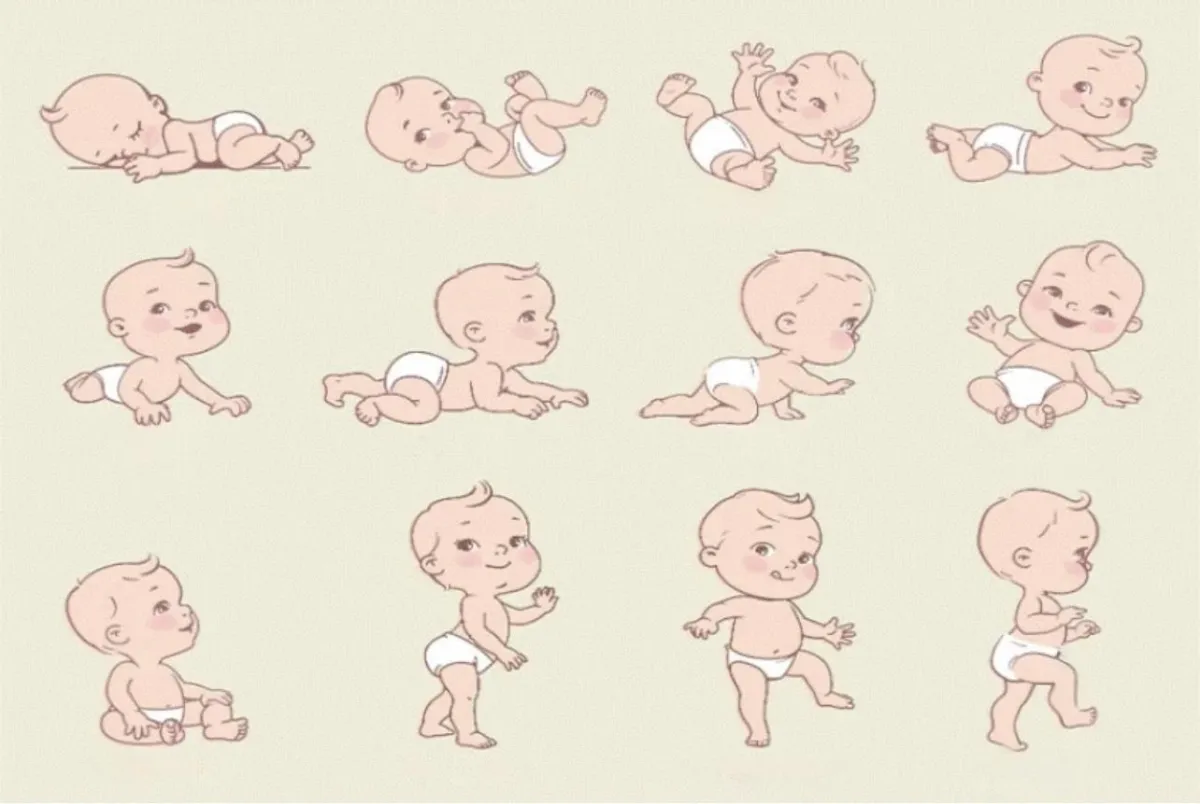
That’s when the brain forms its foundational wiring. Each physical milestone a baby hits - eye tracking, rolling, head lifting, crawling, walking- activates specific parts of the brain and builds critical neural connections.
Miss a stage? Or rush through it?
👉 That wiring doesn’t form the way it should.
And that can show up years later as:
Speech delays
Difficulty concentrating
Emotional dysregulation
Learning challenges
Behavioral issues
Most parents celebrate when a child walks early. I know I did.
But if a child skips crawling, for example, they miss an essential step that helps connect the left and right brain hemispheres - which are vital for speech and learning.
It's not just what they do. It’s how long and how completely they do it.
For example, if a child crawls for only a month or skips the early crawling stage and goes straight to all fours, their brain doesn’t get enough time to build the connections it needs.
How Do We Fix What Was Missed?
🧠The brain is designed to catch up — if you know how to guide it.
That’s where these physical exercises come in.
This method is originally known as the "Метод Замещающего Онтогенеза", which translates to English as Compensatory Ontogenesis Method.
It has been used in Europe with success for more than 30 years.
This method helps your child “replay” the critical developmental stages they missed—using physical movement to re-activate brain areas that didn’t get properly wired.
Based on the Compensatory Ontogenesis Method used for 30+ years in Europe.
Inspired by Dr. Alexander Luria.
Trusted by millions of parents helping kids with speech, focus, and regulation.

The solution was originally developed in the 1940s by the father of neuropsychology, Dr. Alexander Luria.
His remarkable success rehabilitating soldiers returning from the battlefields of WWII with traumatic brain injuries is the foundation of today’s theory of neuroplasticity. Neuroplasticity is the brain’s ability to rewire itself.
Luria’s research showed how the brain can rebuild functions through targeted movement, even years after a delay or injury.
Later, his ideas were developed further by other specialists in neuropsychology and education.
They studied how missing certain early developmental stages could affect a child’s ability to learn, speak, and regulate emotions - and they found a way to help.
Through targeted movement and body-based exercises, they discovered it’s possible to gently “bring back” those missed stages and give the brain a second chance to build the connections it needs.
This is exactly the method that the Russian specialists used to help my son.
So What Does This Method Involve?

It’s a simple series of targeted physical exercises that “replays” the missed developmental stages forcing the brain to form missing neural connections.
Once your child is able to complete all the exercises correctly and with ease, the program is finished - and new neural connections have been formed.
Since I couldn't find anything like this in the U.S. I decided to create a video course that teaches parents exactly what I learned so they can try it with their children.
I call the course the The Gap Jump Method.
Here's what The Gap Jump course includes:
✅ 15 simple core exercises with variations
✅ Step-by-step videos & text tutorials you can follow at home
✅ No equipment needed—just a soft surface
✅ No appointments, no expensive therapy, no driving around.
*No experience needed
**Works even if your child has tried therapy
***You’ll start seeing changes in just a few weeks
Special THANKS to the parents for recording these videos:
The Gap Jump Method is for you if...
✅ Your child's speech is delayed or missing
✅ You’ve tried therapy but progress is slow
✅ You want something you can do at home, without stress
💬 Have questions before you start? We’ve got answers.
FAQ
Who is it for?
✅ Perfect for: nonverbal kids, ADHD/autism, struggles with academic learning
❌ Not for: families unwilling to be consistent
What if my child didn't skip any developmental stage but still has problems?
That’s a good point — but it’s not just about whether a stage was skipped. Sometimes, it’s about not spending enough time in it. For example, my son did crawl — but not for long, and never on his stomach, only on all fours. That detail matters more than most people realize.
In Russia, they don’t leave it to guesswork. If a child has any kind of developmental challenge, they’re automatically assigned these foundational movement exercises — because it's understood that these early patterns are the building blocks of brain development. It’s not optional. It’s the starting point.
Are these exercises safe?
Yes — the movements are gentle, simple, and designed specifically for young children. They’re things most kids do naturally during early development: rolling, crawling, stretching, balancing, etc.
There’s no equipment, no impact, and nothing intense — just slow, body-based movements done on a soft surface.
That said, every child is different. If your child has a specific medical condition, physical limitation, or developmental diagnosis, it’s always a good idea to check with your pediatrician or therapist before starting any new physical activity. For most children, these exercises are not only safe — they’re calming, regulating, and developmentally beneficial.
What if I don’t have any experience?
You don’t need any experience! We’ve done the hard work of studying everything and putting it into a simple routine to follow. You just need to trust the process and consistently do those exercises with your child.
What if my child has already been in therapy for years?
Perfect! This method complements therapy and often fills in what was missing.
Can I do this if I work full-time?
Absolutely. Just 20-30 minutes a few times a week is enough to start seeing change.
Will this help with autism, ADHD, or sensory issues?
Many parents have reported improvements in focus, speech, and behavior.
But of course you should always ask your child's medical professionals if it's safe to perform simple physical exercises before you begin.
What if my child resists the exercises?
No problem. They’re playful and engaging—most kids enjoy them once they start. You could start slow with just 1-2 exercises per day.
When will I see results?
Some parents notice shifts in 3-4 weeks. Most see measurable changes within 2 months. In our case, my son said his first full sentence in about 3 weeks.
Is this scientifically backed?
Yes. It’s based on neuroplasticity and decades of research by Alexander Luria and his followers.
What age is it for?
Ideal for ages 2–9, but helpful for older kids too—especially with learning or focus issues.
I'm not a doctor, I'm just another mom that found what worked for her kid.
And it is so simple that I want to share it with the rest of the world.
WHY CHOOSE THE GAP JUMP METHOD
✅Built on the Compensatory Ontogenesis Method (but structured & simplified)
✅Used in Europe with success for over 30 years
✅Proven to rebuild brain connections through physical motion
✅Helps even if your child is non-verbal, diagnosed with autism, or has learning delays
✅Creates stronger bond between you and your child while doing these exercises
Every day that passes is a missed chance to help your child catch up!
But you can start today — with just 20 minutes on your living room floor.
No appointments. No therapy bills.
Just simple steps at home — built from decades of research.
"It’s like giving the brain a second chance to wire itself"